A powerful, slow-moving nor’easter tore through Brooklyn and the greater New York City area this past weekend, flooding streets, downing trees, and leaving thousands without power as the storm parked itself over the region for the better part of three days.
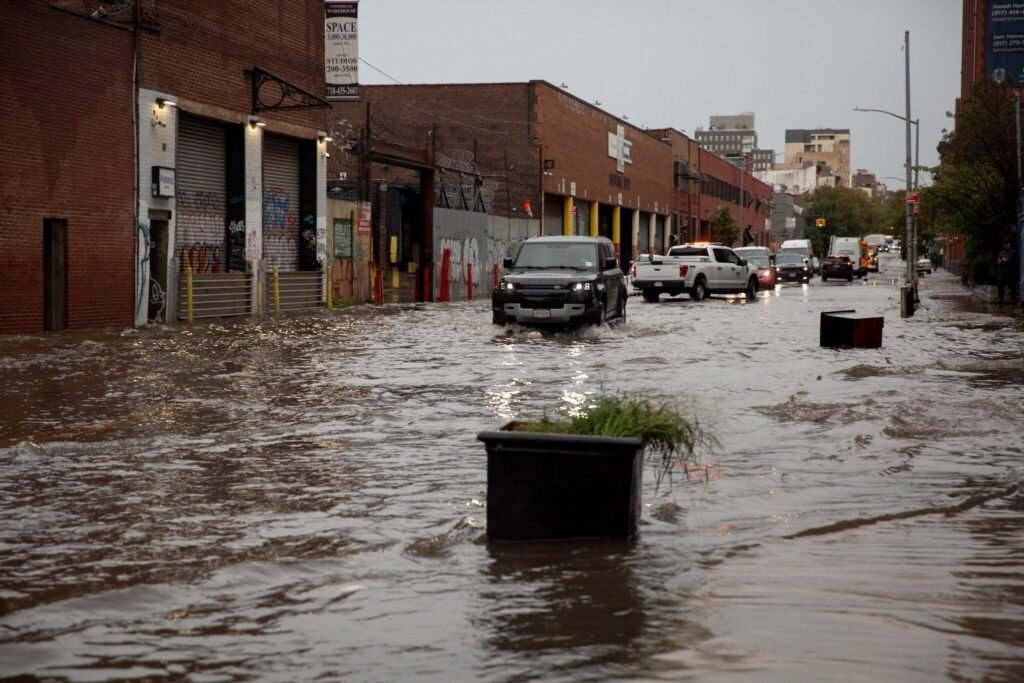
Flooding along a Brooklyn street during the weekend nor’easter. Photo: The New York Times
Governor Kathy Hochul declared a state of emergency for New York City on Friday, just hours before the storm rolled in with wind gusts topping 55 miles per hour. By Saturday, high tides had already pushed water into low-lying neighborhoods across the borough, with flooding reported from Coney Island to Red Hook and Greenpoint. In Coney Island, the MTA installed storm doors at subway entrances along Mermaid and Neptune Avenues to try to keep floodwater out of the system.
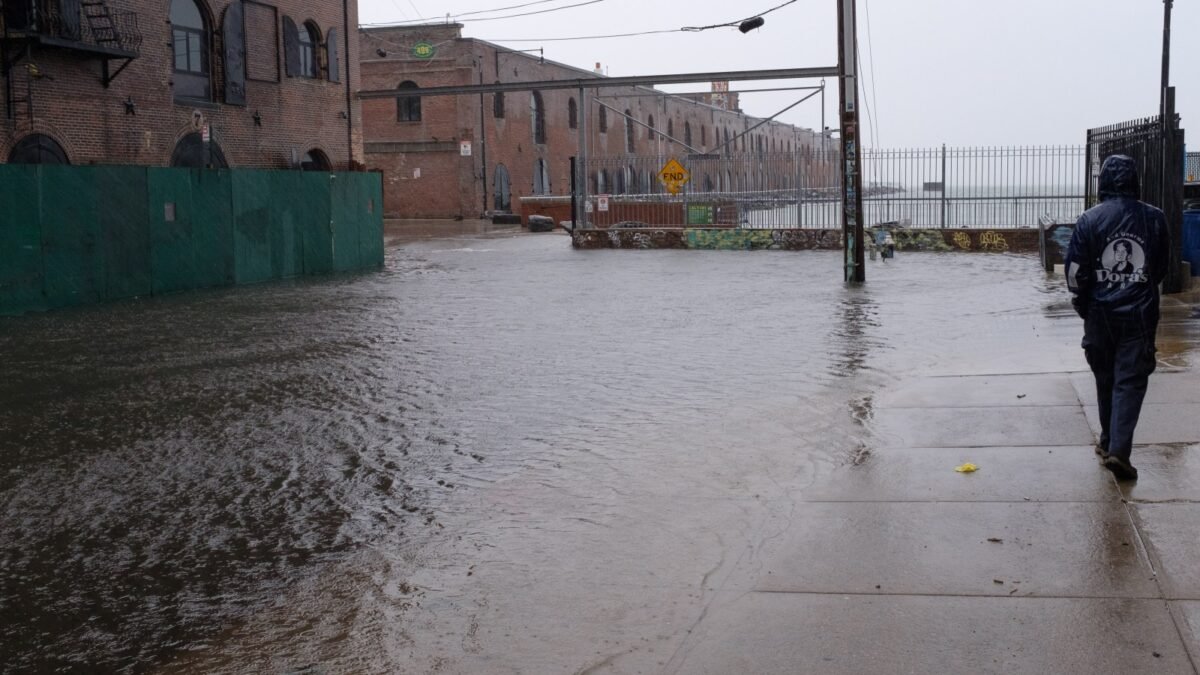
High tides pushed water into low-lying neighborhoods from Coney Island to Red Hook. Photo: The Gazette
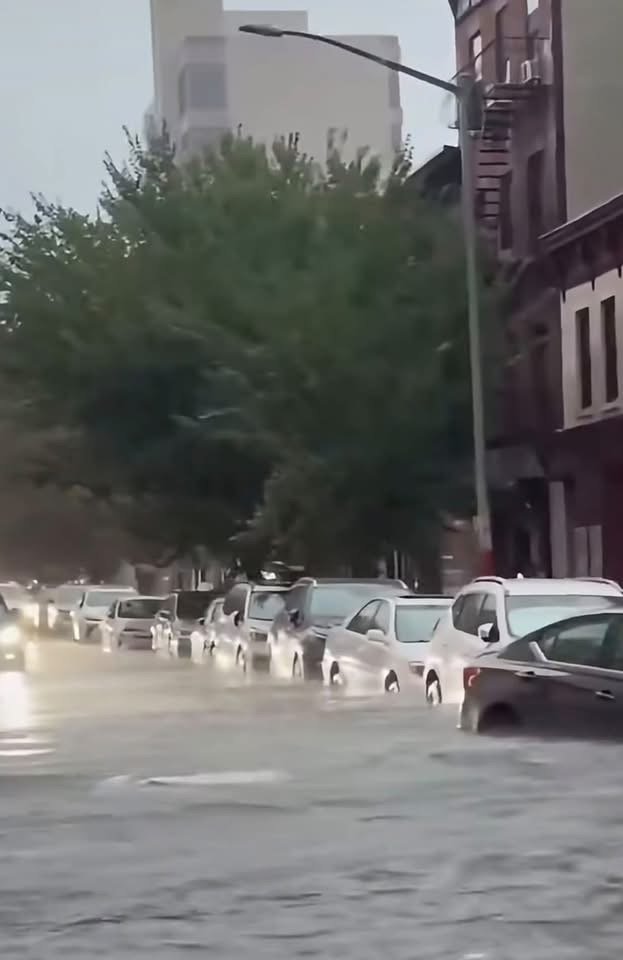
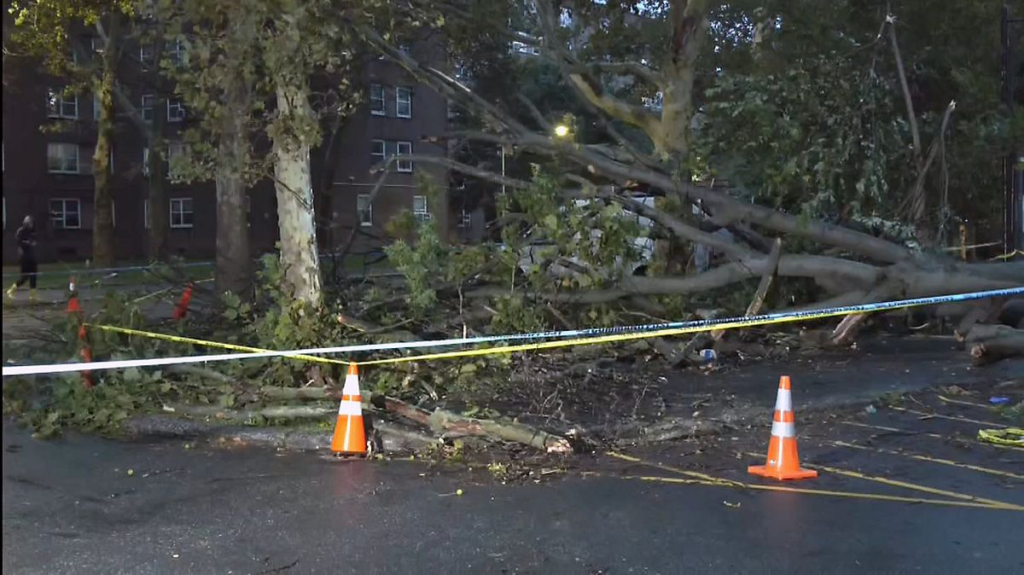
The flooding continued into Sunday as a second round of high tides swept through the region. Streets across Brooklyn turned to rivers, and fallen trees littered blocks throughout the borough, snapping power lines and leaving residents in the dark.
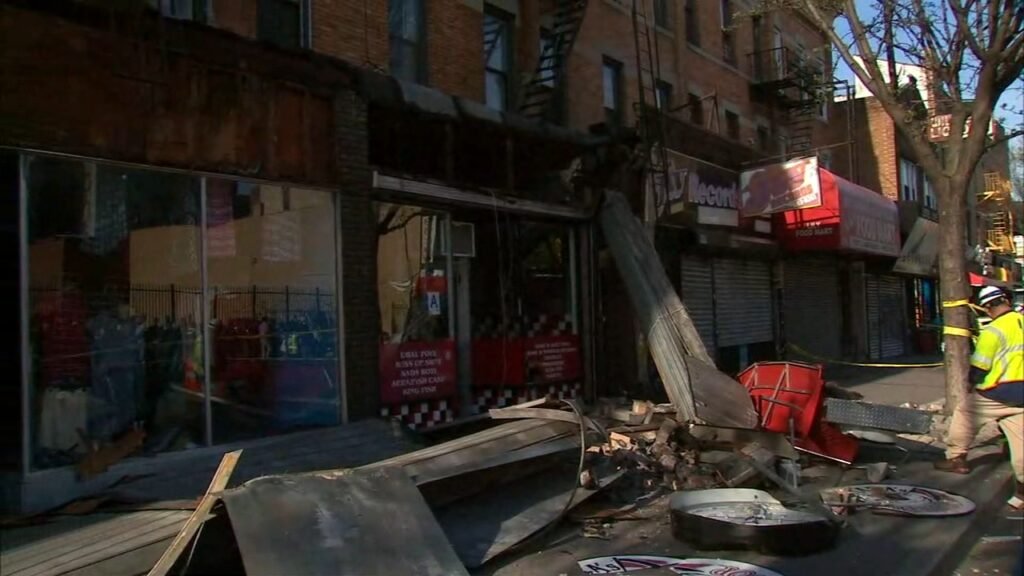
The storm’s impact was felt hardest in East Flatbush, where a brick parapet wall collapsed at a three-story building on Church Avenue, just off Nostrand Avenue. The collapse forced dozens of residents from their homes as emergency crews worked to secure the building and assess the damage.
Emergency crews assess a Church Avenue building in East Flatbush after a parapet wall collapse. Photo: ABC Channel 7
Citywide, the nor’easter proved deadly. A New York City Housing Authority worker was killed after being struck by a falling tree, and four other people were hospitalized with injuries after also being struck by falling trees during the height of the storm. Across the Northeast, more than 130,000 customers lost power at the storm’s peak, with Long Island and other parts of New York state among the hardest hit.
Fallen trees littered blocks across the borough, snapping power lines. Photo: SuaraGarut.id
By Monday, the storm finally began to loosen its grip on the region, with forecasters calling for conditions to ease through the start of the week, though lingering rain and wind were still expected across parts of New England.
For Brooklyn residents cleaning up in the storm’s aftermath, the message from city officials was clear: stay clear of downed power lines and damaged structures, and report any storm damage to 311.
A guide to one of New York’s most vibrant, diverse, and underrated neighborhoods — right in the heart of Brooklyn.
If you’ve never spent a real afternoon in Flatbush, you’re missing one of Brooklyn’s best-kept secrets — except it’s not really a secret anymore. In 2024, Time Out named Flatbush the coolest neighborhood in all of New York City and the 17th coolest in the world. And honestly? That is so on point.
Flatbush sits at the literal heart of Brooklyn, bordered by the beloved Prospect Park to the north and Brooklyn College to the south. It’s a neighborhood that has always known who it is — layered, lively, and deeply human. Whether you’re a longtime New Yorker or just discovering the outer boroughs, Flatbush deserves a full day of your time.
“It’s the kind of neighborhood you only find in Brooklyn.”
A Little History
Flatbush has roots that go all the way back to 1651, when Dutch settlers founded it as Vlachte Bos — meaning “flat woodland.” For centuries it was farmland and quiet village life. Then came the railroads, the Brooklyn Bridge, Prospect Park, and waves of immigrants from Italy, the Caribbean, Southeast Asia, and beyond. Each community left its mark, and that layering is exactly what makes Flatbush feel so alive today.
The neighborhood is also home to Erasmus Hall, the oldest high school building in New York City, and the magnificent Reformed Dutch Church built in the 1790s. History isn’t just on display here — it’s woven into daily life.
The Vibe
Walk down Flatbush Avenue on any given afternoon and you’ll hear music drifting from open storefronts, smell jerk chicken from a sidewalk grill, and pass a fruit stand selling fresh coconuts next to a Victorian brownstone. The neighborhood hums with what can only be described as authentic Brooklyn energy — unpretentious, warm, and electric.
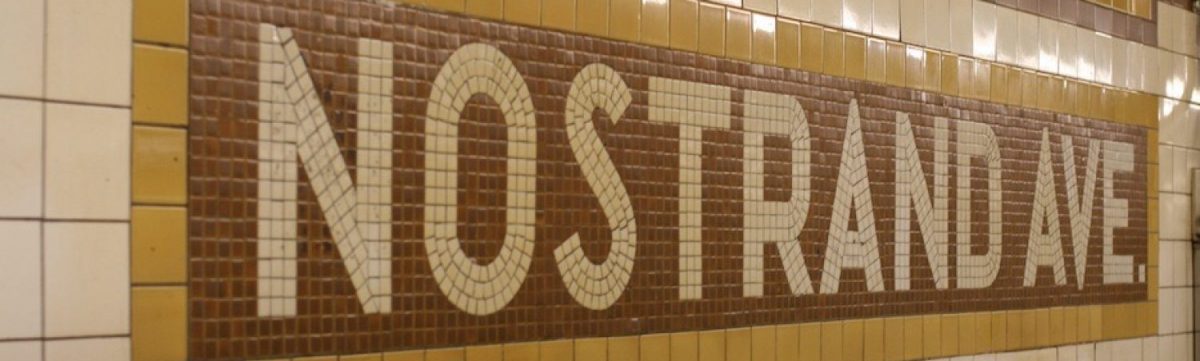
Flatbush is home to the largest and most diverse Caribbean-American and Latinx community outside of the West Indies. The area along Nostrand, Church, and Utica Avenues — known as Little Caribbean — is the heart of that culture, and it’s a destination in itself. We at The NA Times hail from Nostrand Avenue and can testify to just how cultural the neighborhood really is.
Where to Eat and Drink
The food scene here is a full world tour. Caribbean spots dominate in the best way, but you’ll also find Thai, Mexican, French, Japanese, and Italian restaurants sharing the same blocks.
MangoSeed Restaurant: Jerk chicken & waffles, bottomless mimosas, and homemade lemonade. A Flatbush staple.
Aunts et Uncles: Beloved vegan Caribbean spot with a cozy community feel.
Hibiscus Brew: Stop here for a cold sorrel drink — refreshing and totally authentic.
Sycamore Bar & Flowershop: Craft cocktails, an outdoor patio, and fresh flowers for sale. Yes, really.
Mr. P’s Homemade Ice Cream: Local favorite for creative, handcrafted scoops. Get a cone and walk.
Miss Barbs: A great wine spot with solid community energy and rotating events.
Things to Do
Beyond eating (though honestly, that alone could fill a day), Flatbush offers a lot. Prospect Park is right on the neighborhood’s doorstep — summer concerts at the Bandshell, fishing in the lake, ice skating in winter. It’s one of the best urban parks in the country and Flatbush residents treat it like their backyard.
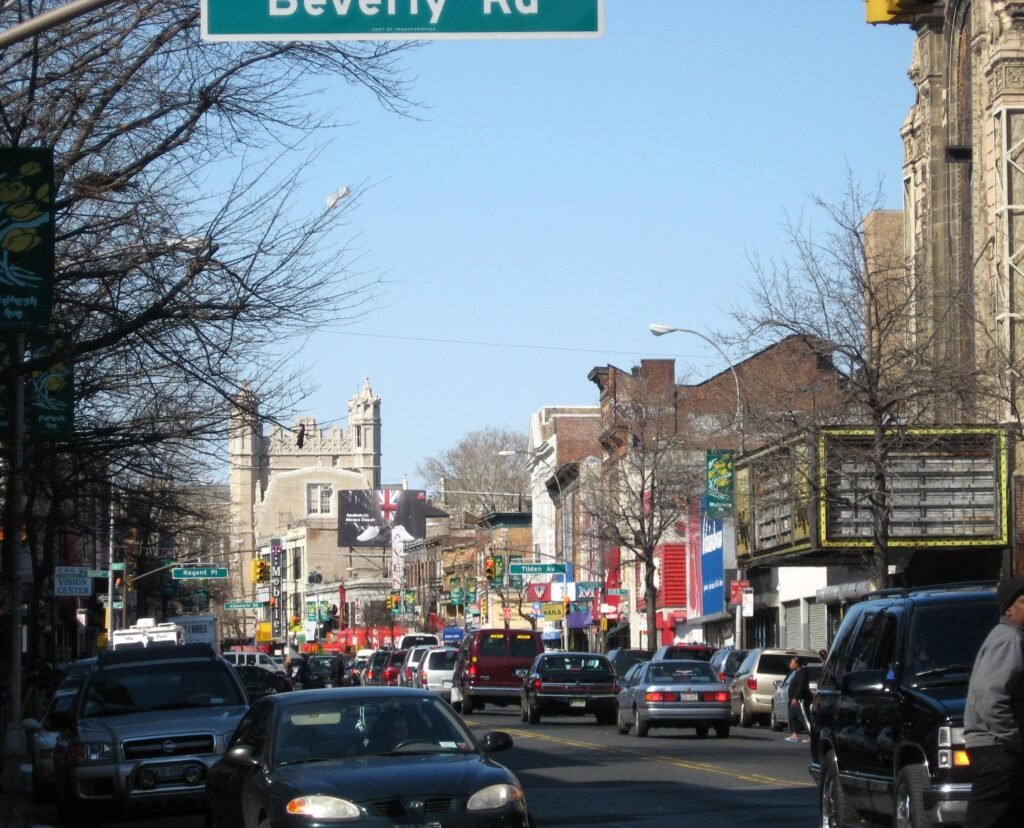
For culture, the Kings Theatre on Flatbush Avenue is a must. Originally built as a movie palace in 1929, it was restored and reopened in 2015 as one of the most stunning performance venues in all of New York. Even if you don’t catch a show, walk by and take in the architecture.
The Flatbush Caton Market on Flatbush Avenue has been a neighborhood institution since 2000 — an open-air market with local vendors, food stalls, and community goods. And Lips Cafe hosts regular community events from Canvas & Cabernet nights to First Fridays networking — a great way to meet locals.
Architecture Worth Stopping For
One of Flatbush’s hidden pleasures is its architecture. The southern section of the neighborhood — often called Victorian Flatbush or Ditmas Park — is filled with grand, free-standing Victorian homes from the late 19th century. Tree-shaded front lawns, lush foliage, and grassy medians called the Flatbush Malls give the area a quiet, almost suburban feel that surprises most visitors.
Take a self-guided walk along Albemarle Terrace, Albemarle Road, and Rugby and Buckingham Roads. You’ll feel like you’ve been transported somewhere else entirely — while still being firmly in the center of Brooklyn.
QUICK TIPS FOR YOUR VISIT
Take the Q, 2, or 5 train — Flatbush has excellent subway access from Manhattan
Visit on a weekend for the most street life and open markets
Do a food crawl along Nostrand Ave through Little Caribbean
Check the Kings Theatre calendar before you go — shows sell out
Bring cash for the Flatbush Caton Market vendors
Walk Albemarle Road for the Victorian architecture — it’s stunning
The Bottom Line
Flatbush is one of those neighborhoods that rewards curiosity. It doesn’t try to be anything other than itself — and that’s exactly what makes it so compelling. The food is real, the community is tight-knit, the history runs deep, and the energy is unlike anywhere else in the city. If you haven’t been, go. If you have, you already know.
Have a favorite Flatbush spot we didn’t mention? Drop it in the comments — we’d love to hear about it.